 Fraunhofer Institute for Wind Energy Systems
Fraunhofer IWES conducts North Sea measurements with lidar buoys on behalf of the BSH
Due to a contract with the Federal Maritime and Hydrographic Agency (BSH), the Fraunhofer Institute for Wind Energy Systems IWES has once again installed two lidar measuring buoys in the North Sea. The buoys will collect data for a twelve-month measurement campaign for the preliminary meteorological investigation of area N-9.5 as part of the area development plan. Fraunhofer IWES can draw on its experience from previous projects for these complex preliminary investigations. It is thus contributing to the successful offshore expansion in the coming years.
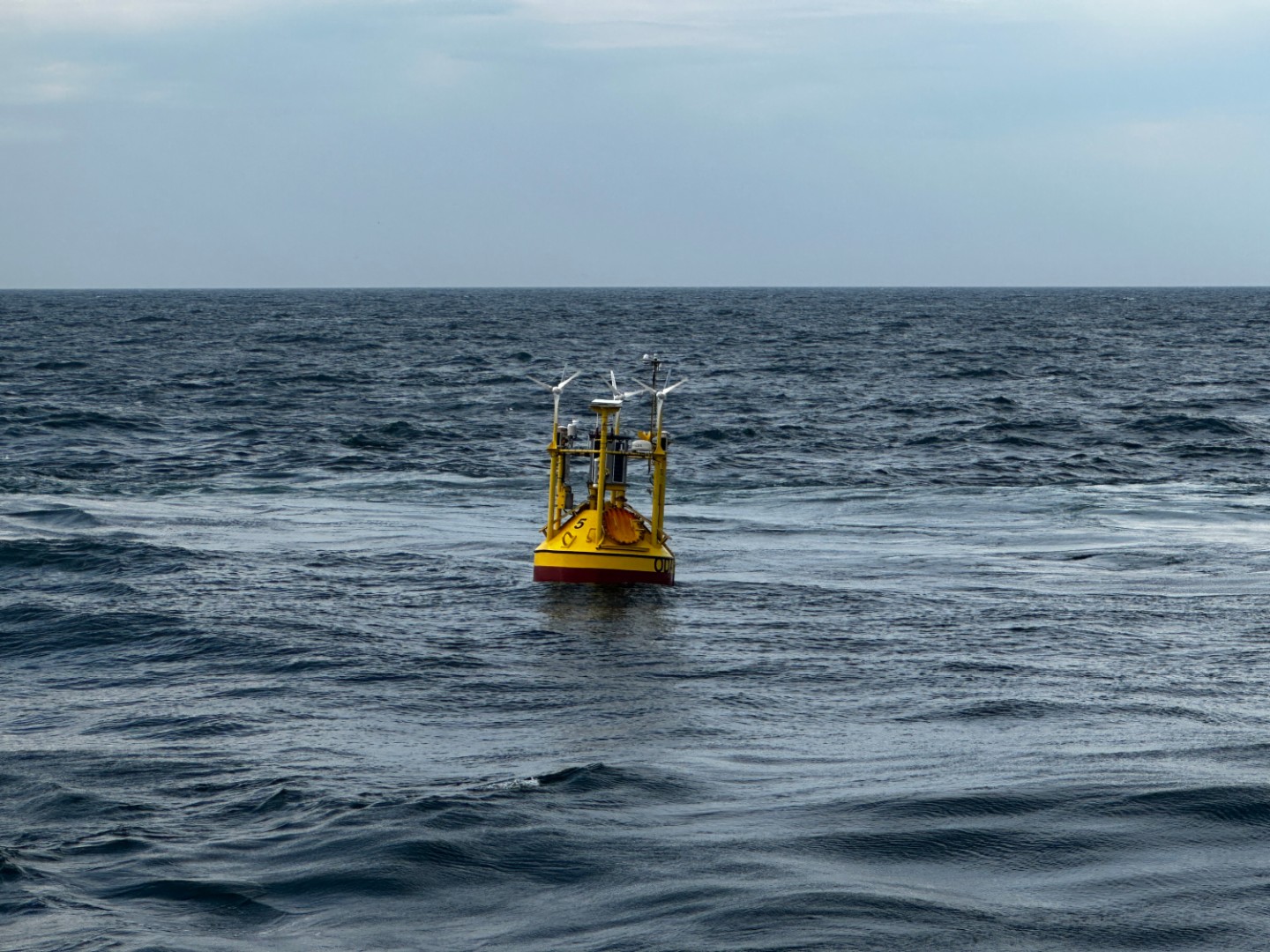
Since early September, the two lidar measuring buoys have been at their designated locations in the German Bight near the Dutch border, transmitting data on wind speeds and directions as well as waves and currents. The two Fraunhofer IWES wind lidar buoys are light detection and ranging buoys that use a laser-based measurement method to determine wind speeds at high altitudes.
To ensure optimal coverage of the area by the collected measurement data, the area is measured by two buoys. To ensure that the measurements run smoothly, the buoys are continuously monitored automatically. In addition, a team of engineers checks their status remotely on a daily basis. The measurement data is continuously checked for quality and plausibility.
"We are delighted to be conducting another measurement campaign of this kind for BSH and thus making a significant contribution to the expansion of renewable energies," says Stephan Stone from Fraunhofer IWES.
The meteorological and oceanographic data collected will be evaluated and used for the efficient and economical design, planning, and modeling of offshore wind farms.
Fraunhofer IWES has already successfully completed four measurement campaigns in the German Bight on behalf of the BSH. The data sets generated are publicly available and are used by wind farm operators to make decisions, for example, on the number of wind turbines to install, the layout of the wind farm, and the precise design of the wind turbines. The measurement data for area N-9.5 will also be made available via the BSH's data portal for preliminary area investigations once the campaign has been completed.
__
Fraunhofer IWES
The Fraunhofer Institute for Wind Energy Systems IWES conducts application-oriented research for a sustainable future. The focus topics of the Fraunhofer IWES are offshore, hydrogen, test infrastructure and digitalization. The research work in these future-oriented key technologies plays a central role in the innovation process and strengthens the business location for the benefit of our society by transferring the research results to industry. More than 400 employees at nine locations are developing innovative methods to accelerate the expansion of the wind energy and hydrogen economy, minimize risks, and increase cost efficiency.
Last modified: